Can Portable Power Stations Run Refrigerators?
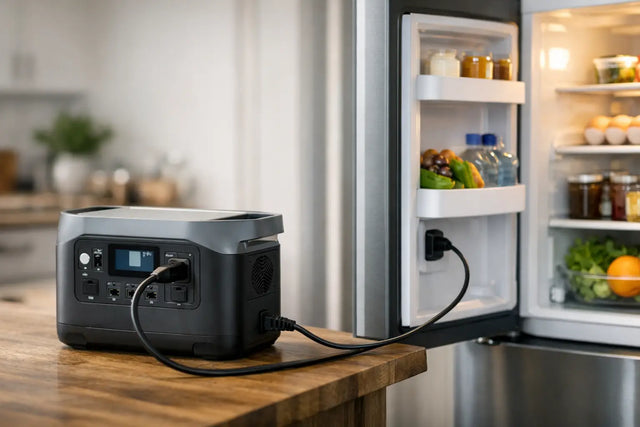
A refrigerator is one of the first appliances people worry about when the power goes out, and for good reason. Cold food gets expensive fast. So, can portable power stations run refrigerators? Yes, many can - but only if the power station has enough starting output, enough battery capacity, and the right runtime expectations for your specific fridge.
That last part matters more than most people expect. A portable power station that handles phones, lights, and a router without breaking a sweat may still struggle with a refrigerator. Fridges are motor-driven appliances. They cycle on and off, pull extra power at startup, and their real-world energy use depends on room temperature, door openings, and how full they are.
Can portable power stations run refrigerators reliably?
They can, but reliability comes down to matching the power station to the refrigerator instead of buying by battery size alone. You need to look at two numbers: the refrigerator's running wattage and its startup surge. The running load is what it uses once the compressor is operating. The surge is the brief spike when that compressor kicks on.
A modern full-size refrigerator may run somewhere around 100 to 250 watts during normal operation, but startup can jump much higher for a moment. Older units, large garage refrigerators, and fridge-freezer combos can demand more. Compact fridges usually need less, though not always by as much as people think.
That means a power station with a 300W inverter might look fine on paper if your fridge normally draws 120W, yet still fail when the compressor starts. A unit with a stronger inverter and a healthy surge rating is often the better choice than a battery with decent capacity but weak output.
What size portable power station do you need?
For most refrigerators, the safest starting point is a power station with at least 1000W of continuous AC output and a surge rating comfortably above that. For runtime, many shoppers should be looking at 1000Wh and up, with larger batteries making a big difference if the outage lasts more than a few hours.
There is no one-size-fits-all answer because fridge types vary. A dorm fridge may run on a smaller station. A standard kitchen refrigerator usually needs a mid-size to large unit. A chest freezer or older secondary fridge in a hot garage may call for even more battery and inverter headroom.
If you want a practical way to think about sizing, break it into three categories.
Small refrigerators and mini fridges
These are the easiest loads for a portable power station to handle. A quality unit in the 500Wh to 1000Wh range may work, assuming the inverter can manage startup surge. This can be enough for short outages, RV use, or keeping drinks and essentials cold overnight.
Standard kitchen refrigerators
This is where most backup power buyers should focus. A battery in the 1000Wh to 2000Wh range is a more realistic baseline, paired with a solid inverter. If food preservation is a priority during storms or grid interruptions, more capacity gives you more breathing room.
Larger, older, or less efficient units
These refrigerators are where undersizing shows up quickly. If the unit lives in a garage, cycles often, or has higher starting demands, a larger power station or expandable system makes more sense. In preparedness planning, this is usually the better route than trying to squeeze a heavy appliance onto a smaller battery.
How long will a portable power station run a refrigerator?
This is the question people ask most, and the honest answer is: it depends on battery capacity and how often the compressor runs. A refrigerator does not pull full power every minute of the day. It cycles.
For example, a 1000Wh power station does not give you 1000 usable watt-hours at the wall. Some energy is lost through inverter efficiency. In real use, you may have something closer to 850Wh to 900Wh available for AC appliances. If your refrigerator averages 80 watts over time because it cycles on and off, you could get roughly 10 hours or so. If it averages 150 watts in warmer conditions, runtime drops.
Open the doors often, put warm groceries inside, or place the fridge in a hot room, and battery life shrinks. Keep the door closed, start with a fully cold refrigerator, and use it in a cooler environment, and runtime improves.
That is why people preparing for outages often choose more capacity than the math suggests. The extra battery is not wasted. It covers startup losses, warmer weather, overnight operation, and the fact that emergencies rarely happen under ideal conditions.
The specs that matter most
When comparing power stations for refrigerator backup, battery size gets most of the attention, but it is only part of the picture. Output rating, surge capability, battery chemistry, and charging options all affect whether the setup is actually dependable.
Inverter output and surge rating
This is the first gate. If the inverter cannot handle compressor startup, the refrigerator will not run consistently. Look for enough continuous wattage and a clear surge rating rather than guessing.
Battery capacity
This determines how long the fridge can stay on between charges. Higher watt-hour ratings generally mean longer runtime, but only if the inverter can support the load in the first place.
Battery chemistry
For backup use, lithium iron phosphate batteries are often appealing because of their longer cycle life and better long-term value. If you expect to use the station for repeated outages, off-grid trips, or seasonal cabin support, chemistry matters.
Recharging options
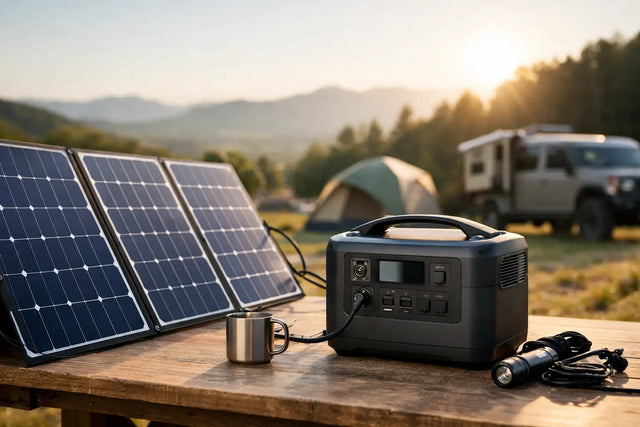
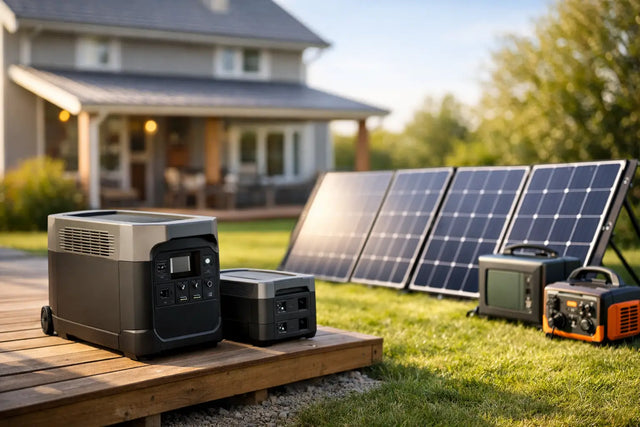
If the outage is short, wall charging may be enough. If you are planning for extended outages, solar charging becomes much more important. A power station that can recharge from solar panels during daylight can keep refrigeration going much longer than battery storage alone.
When a portable power station is a good fit
Portable power stations make sense for refrigerators when you want quiet backup power, indoor-safe operation, and a setup that does not require fuel storage or engine maintenance. That makes them a practical option for homeowners, apartment residents, cabin owners, RV users, and families building a basic emergency power plan.
They are especially useful for short to medium outages, overnight food protection, and targeted backup. Instead of trying to run the whole house, you keep the essentials covered - refrigerator, freezer, lights, device charging, and maybe a few medical or communication items.
For many people, that targeted approach is the most practical and affordable step toward energy resilience.
When it may not be enough on its own
A portable power station has limits. If you are trying to keep a refrigerator running for multiple days with no grid power and no solar input, battery-only backup can run out faster than expected. The same is true if you are powering multiple cold-storage appliances at once.
This is where planning matters. One refrigerator may be manageable. A refrigerator, chest freezer, microwave, coffee maker, and space heater on the same station is a different story.
If your goal is longer-duration backup, look at larger-capacity systems, expandable batteries, or a setup that pairs a power station with sufficient solar input. For serious preparedness, the better question is not just whether a unit can run a refrigerator, but for how long, under what conditions, and alongside what other loads.
A simple way to check your refrigerator before you buy
Start with the appliance label or manual and find the voltage and amperage, or the wattage if it is listed directly. If only amps are listed, multiply volts by amps for a rough wattage estimate. Then allow room for startup surge rather than sizing right at the edge.
If you have a watt meter, even better. Measuring actual consumption over a day gives you a more grounded picture than relying on broad averages. That is especially helpful if your refrigerator is older or if you plan to use the power station in a garage, workshop, RV, or cabin.
For shoppers comparing systems, this step avoids a common mistake: buying for the advertised average instead of the real startup demand and runtime you need.
The practical bottom line
Yes, portable power stations can run refrigerators, and for many households they are a smart part of an outage plan. The key is choosing a unit with enough inverter strength for startup, enough battery capacity for realistic runtime, and a recharge strategy that matches how long you may be without power.
If you are building for preparedness rather than convenience, size with margin. A refrigerator is too important to leave to best-case assumptions. Radiant Ridge Supply serves customers who want dependable independent power for exactly that reason - equipment should work when conditions are less than ideal, not just when the numbers look good on a product page.
A good backup setup does more than keep food cold. It buys time, reduces stress, and gives you one less thing to worry about when the grid is not doing its job.